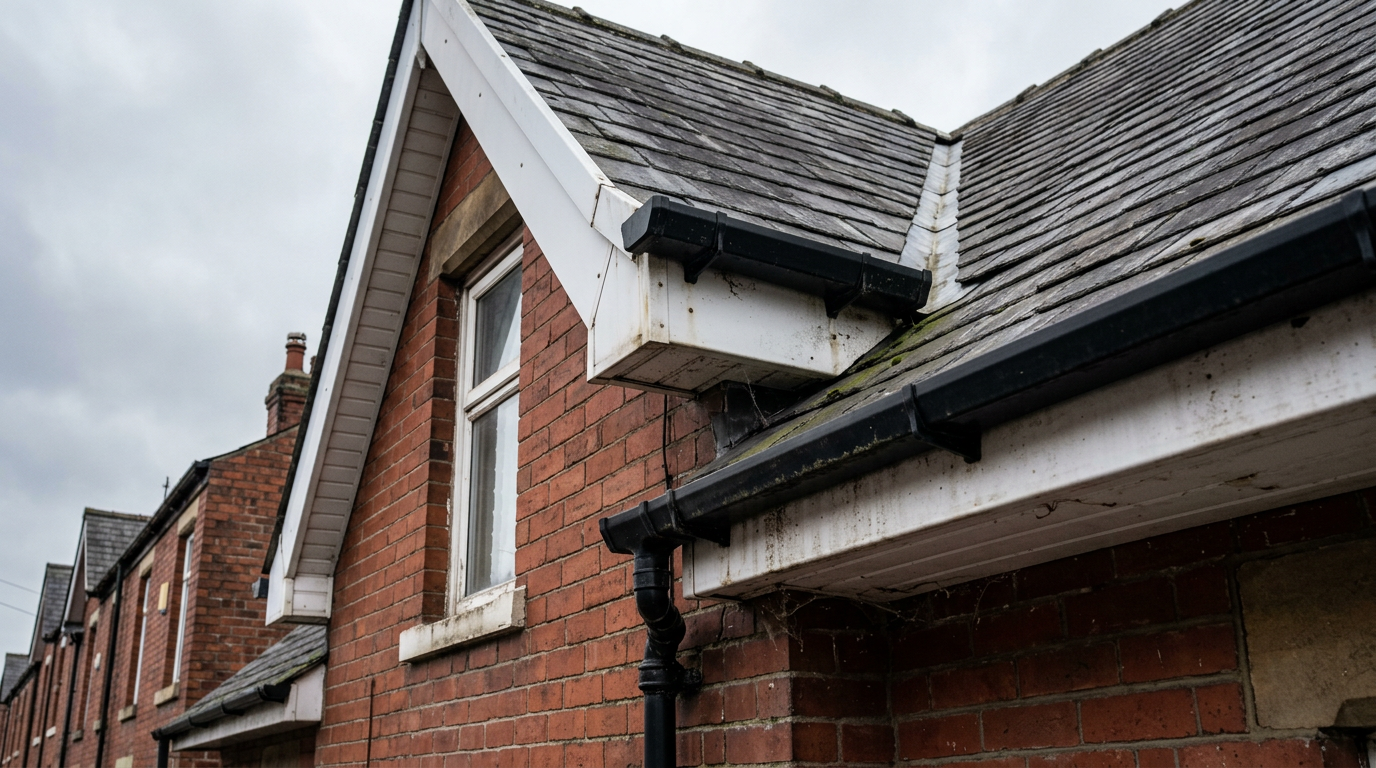
When Should You Replace Guttering, Fascias and Soffits in Burnley?
Guttering, fascias and soffits do more than tidy up the edge of the roof. They play an important part in moving rainwater away from the property, protecting the roofline and helping prevent damp problems around walls, eaves and loft areas. In Burnley, where properties deal with regular rain, colder weather and general wear over time, roofline materials do not last forever. The problem is that deterioration often happens gradually. A gutter may still seem to work for a while even though joints are failing, fascia boards may look acceptable from a distance while moisture is already getting behind them, and soffits can begin to weaken before the average homeowner spots the warning signs. Knowing when replacement makes more sense than continued patching can help you avoid recurring leaks and bigger maintenance issues later.
Why the roofline matters so much
Your roofline system works as a whole. Guttering collects and channels rainwater away from the roof. Fascias support the lower edge of the roof and provide a fixing point for the guttering. Soffits help protect the underside of the eaves and contribute to ventilation around the roofline. If one part starts failing, it often has a knock-on effect on the others.
That is why roofline issues should not be seen as cosmetic only. Overflowing gutters can soak walls and foundations, failing fascias can affect how securely guttering stays fixed in place, and damaged soffits can leave vulnerable areas exposed to moisture and pests. Replacing the system at the right stage can help protect the wider property rather than simply making it look neater.
Overflowing gutters during rain
One of the most obvious signs that guttering may need replacing is overflow during normal rainfall. If water spills over the edge instead of flowing cleanly to the outlets, there may be more than a simple blockage going on. Gutters can sag, joints can fail, sections can warp and the fall can become uneven over time. When that happens, water stops draining properly and starts escaping where it should not.
In Burnley, regular heavy rain can expose these faults quickly. If you keep seeing water running down walls, splashing near the base of the house or spilling at the corners during wet weather, the roofline system may be past the point where minor repairs are enough.
Cracks, splits and failed joints
Plastic guttering and older roofline materials can become brittle with age. Over time, exposure to weather and temperature change can lead to cracks, splits and leaking joints. Small faults may look manageable at first, but once several parts of the system start failing, patching one section after another becomes less cost-effective.
Leaking joints are especially common because that is where movement and wear tend to show first. If multiple joints are dripping, if sections keep pulling apart or if you have already repaired the same area more than once, replacement is often the smarter long-term decision.
Sagging and loose gutter runs
Guttering should sit neatly and securely along the roofline. If it appears to sag, bow or pull away from the fascia, that usually means the brackets, fixings or supporting fascia boards are no longer doing their job properly. Water is heavy, and once guttering begins to drop out of line the stress on the whole run increases.
Loose guttering should not be ignored. Apart from causing water overflow, it can place strain on adjoining sections and speed up damage elsewhere along the roofline. In some cases the issue is the guttering itself. In others, the fascia beneath may already be weakening, which is one reason roofline inspections need to look at the system as a whole.
Peeling fascia boards or signs of moisture damage
If you have timber fascias, paint peeling, soft spots, staining or visible rot are strong signs that replacement may be due. Even on more modern systems, discolouration, warping or fixings starting to pull through can point to age and moisture-related wear. Fascias are there to support the guttering, so once the board begins to weaken, water management usually becomes less reliable too.
A fascia does not need to be falling apart to be a problem. Early moisture damage can sit behind the surface and gradually affect the strength of the board. If the guttering is already showing issues at the same time, replacing both together is often the cleanest and most cost-effective route.
Soffit damage and poor ventilation
Soffits are often forgotten because they are not always at eye level, but they still matter. Cracks, warping, staining or sections coming loose can all indicate the need for attention. In some properties, damaged soffits also affect airflow around the roofline, which can contribute to condensation problems over time.
If the soffits are looking tired and the fascias or gutters are already failing, full replacement is often better than isolated repairs. A joined-up upgrade gives the roofline a more consistent finish and reduces the risk of one weak section causing trouble again shortly afterwards.
Repeated repair history
One of the clearest signs replacement is due is when the same roofline issues keep returning. If you have already cleaned, resealed, re-fixed or patched several parts of the guttering and it still leaks or overflows, continuing to repair it may just be delaying the inevitable. There comes a point where repeated small jobs cost more in time and hassle than replacing the affected roofline properly.
This is especially true if the system is older and multiple sections are beginning to show their age at once. A new roofline installation can remove that cycle of recurring patch repairs and give the property a cleaner, more dependable setup.
How weather in Burnley affects roofline wear
Burnley properties deal with plenty of wet weather across the year, and that repeated exposure naturally affects gutters, fascias and soffits. Water flow, temperature change, wind and general ageing all contribute to wear. Roofline faults can build up slowly, which is why many people do not act until overflow or visible damage becomes impossible to ignore.
The key is not waiting for the system to fail completely. Replacing ageing roofline materials before they start causing damp or structural side effects is usually the better option.
Why timely replacement makes sense
Replacing guttering, fascias and soffits at the right time helps protect the external walls, the eaves and the overall condition of the property. It can also improve the appearance of the home and reduce the likelihood of repeated maintenance work through the wetter months. Instead of dealing with drips, overflow and patch repairs over and over, a proper replacement gives you a cleaner long-term solution.
If you want local roofing help, visit our Roofing Burnley page. For wider roofing coverage across the area, you can also view our Roofing Lancashire page.
If your roofline in Burnley is showing repeated overflow, sagging, cracking or visible ageing, it may be time to stop repairing isolated parts and look at full replacement instead. A proper inspection will show whether the existing system is still worth maintaining or whether a new roofline installation is the smarter move.
