What to Expect During a Roof Replacement in Skipton
If you have been told your roof needs replacing, one of the first questions is usually what the process actually involves. For many homeowners, a roof replacement sounds like a major disruptive job, and while it is certainly a significant piece of work, knowing what to expect makes it much easier to plan. In Skipton, where many properties feature traditional stone buildings, slate roofing and exposed positions that deal with changing weather conditions, roof replacements need to be approached properly from the start. Understanding the stages of the job helps you prepare for the work, ask the right questions and feel clearer about what is happening at each stage rather than feeling uncertain once materials and scaffolding arrive on site.
Why a full roof replacement may be needed
A roof replacement is usually recommended when repairs are no longer the best long-term option. That might be because the roof has widespread wear, repeated leaks, old underlay failure, multiple broken or slipping tiles, or ongoing issues around ridge lines, flashing and roof structure. Sometimes the problem is not one dramatic fault but a long list of smaller problems that keep returning.
In Skipton, where weather exposure and older property styles can place extra demands on roofing materials, there comes a point when replacing the roof makes more sense than continuing to patch isolated sections. A replacement gives the property a fresh weatherproofing system rather than relying on ageing materials to keep performing.
Initial inspection and quotation
The process usually starts with a proper inspection of the roof. This helps identify the current condition, what materials are in place, whether the issue affects the whole roof or only certain sections, and what may be needed once the existing covering is stripped back. At this stage you should get a clearer idea of the likely scope of works, material options and what is included in the quotation.
This is also when practical details are discussed. Access, scaffold requirements, waste removal, estimated timing and any obvious structural concerns are all easier to plan when they are covered early. A good inspection stage removes a lot of uncertainty later.
Scaffolding and site setup
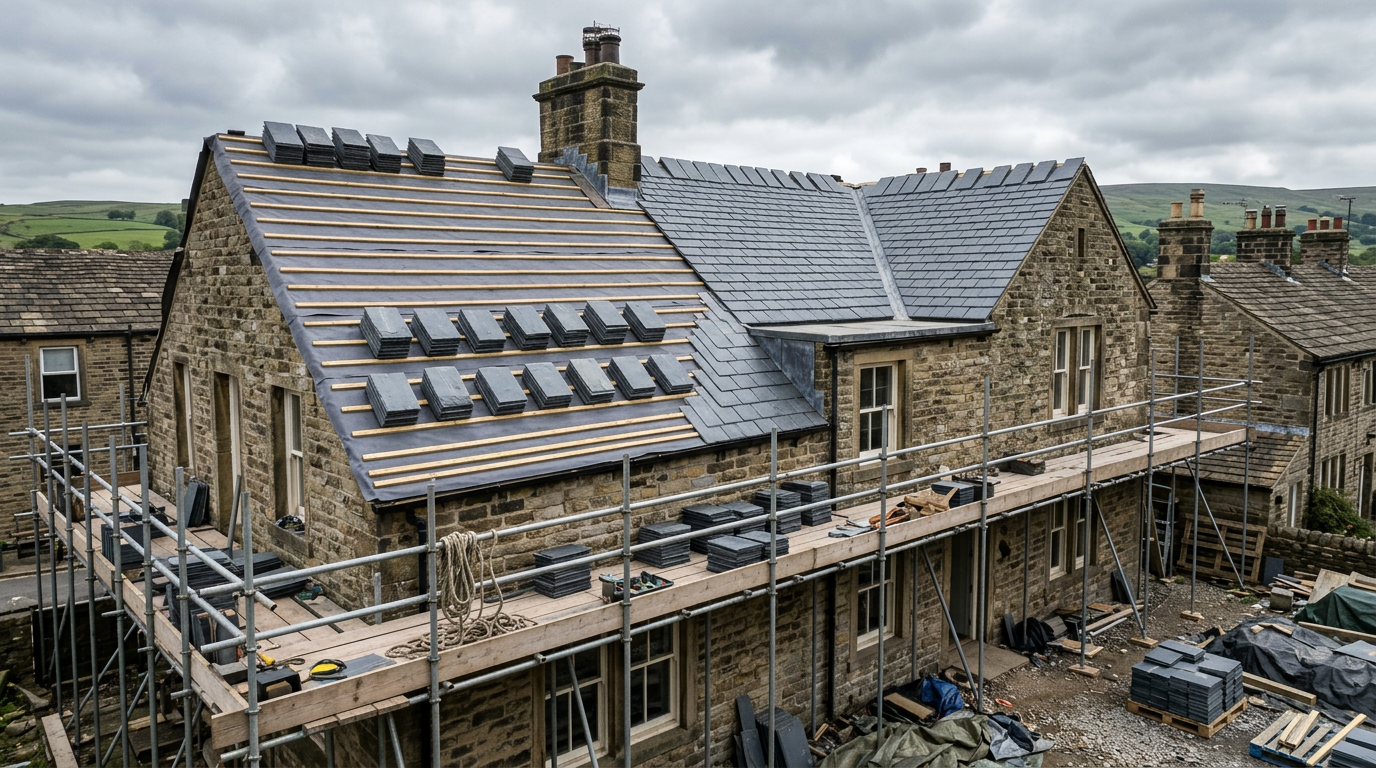
Before the roofing work itself begins, the property is usually prepared with safe access. In many cases that means scaffolding is erected around the relevant parts of the house so the team can work safely and materials can be handled properly. Depending on the roof and property layout, protective sheeting or other setup measures may also be used.
This stage can make the job suddenly feel very real, but it is a normal part of the process. Safe access is essential for quality roofing work, especially on larger or more exposed roofs.
Stripping back the existing roof
Once the job starts, the existing roof covering is removed. That can include old tiles or slates, damaged battens and worn underlay. This stage is important because it reveals the true condition beneath the visible roof surface. In some cases the stripped-back roof shows that the supporting structure is in decent shape. In others, there may be sections of timber or other materials that also need attention before the new covering goes on.
This is one reason a proper roof replacement can be more effective than repeated repairs. It allows the underlying condition to be assessed rather than simply covering over ageing materials again.
Checking the roof structure
After stripping back, the structural base of the roof can be checked more properly. Rafters, decking where relevant, and supporting areas are reviewed to make sure they are in suitable condition for the new installation. If any weakened or damaged sections are found, they can be dealt with at this point rather than being left hidden beneath the new roof.
For homeowners, this stage is valuable because it means the replacement is not just about appearance. It is about restoring dependable performance across the roofing system as a whole.
Installing membrane, battens and new materials
Once the base is ready, the new system begins to go on. A breathable membrane is typically fitted to improve weather resistance, followed by battens that provide the fixing structure for the chosen roof covering. After that, the new tiles or slates are installed carefully across the roof in line with the required layout and detailing.
At this point the roof starts to look transformed quite quickly. However, the visible covering is only one part of the overall replacement. The detailing around ridges, verges, valleys, chimneys and abutments is just as important for long-term performance.
Leadwork, flashing and finishing details
Good roof replacements rely heavily on finishing details. Leadwork, flashing, ridge work and edge details all need to be completed properly so the new roof performs as well as it looks. Chimney junctions and other connection points are especially important because those are often the areas where future leaks begin if the finish is poor.
This is why quality matters. A roof replacement is not simply a case of putting new tiles on top. The weatherproofing details around the whole roof are what make the installation dependable over time.
Waste removal and final checks
As the job nears completion, waste materials should be removed and the site tidied properly. Final checks are then carried out to make sure the roof covering, fixings and detailing have all been completed to the expected standard. This is also the stage where any final questions can be answered about maintenance, expected lifespan and any areas of the property that were part of the works.
For the homeowner, this stage gives reassurance that the replacement has been completed as a full system rather than just as a quick visible improvement.
How disruptive is a roof replacement?
A roof replacement is naturally more disruptive than a minor repair, but the level of disruption depends on the size of the roof, the property type and the weather during the job. There will usually be noise, visible materials on site and temporary changes around access areas. However, with proper planning and communication, most homeowners find the process more manageable than they expected.
The important thing is knowing the work has a clear purpose. Once complete, the new roof gives the property a fresh level of protection, reduces the risk of recurring leaks and removes many of the ongoing worries that come with an ageing roof.
Getting clear advice before the work begins
If you are unsure what your own roof replacement would involve, the best step is to have the roof assessed properly. That gives you a realistic picture of condition, material choice, likely stages and whether full replacement is genuinely the right route. Clear advice early on helps avoid confusion later and lets you plan the work with more confidence.
If you want local roofing help, visit our Roofing Skipton page. For wider roofing coverage across the area, you can also view our Roofing Lancashire page.
If your property in Skipton is reaching the point where repairs no longer feel worthwhile, understanding the roof replacement process is the first step towards making a more informed decision and getting the job handled properly.
