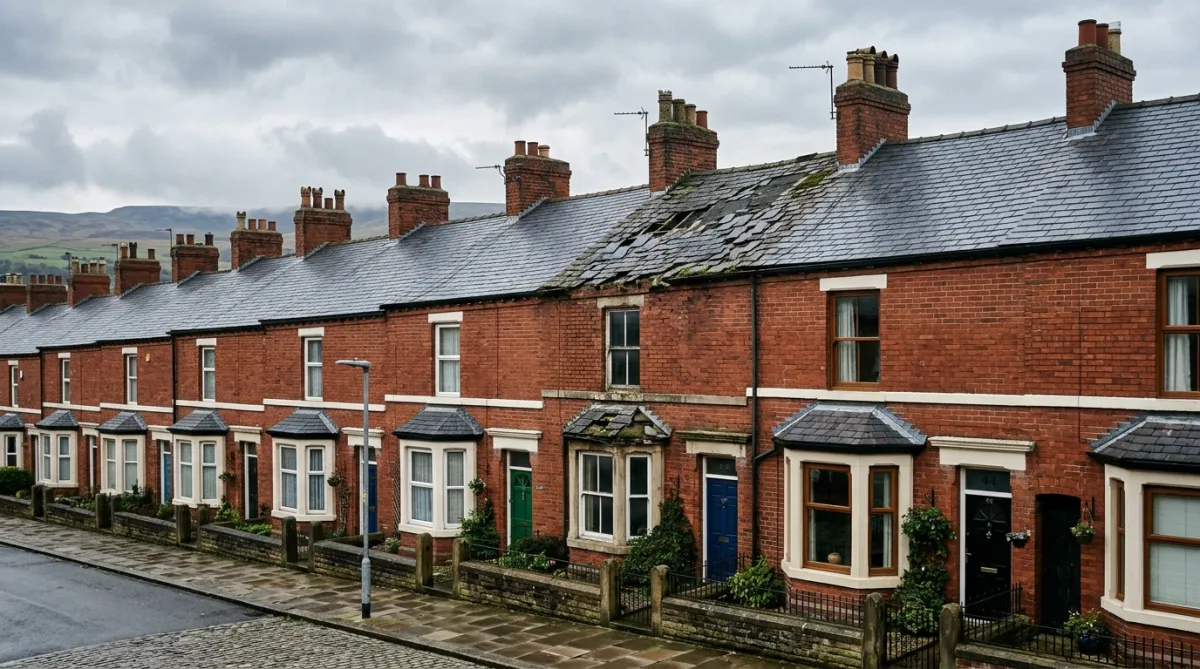
Spotting Nail Sickness on Victorian Terraced Roofs in Burnley
If you own a Victorian terraced house in Burnley, there is one roof problem you cannot afford to ignore. Nail sickness is the most common reason for full re-roofs across East Lancashire's Victorian housing stock, and it tends to creep up on properties before owners realise what is happening. Slates start slipping. The same area keeps needing repairs. Roofers turn up, fix the obvious problem, and three months later another slate is hanging off the gable end.
This guide explains what nail sickness actually is, how to spot it on your Burnley property, and when a repair will do versus when the roof has had its day. At Premier Construction Solutions we deal with this issue week in, week out across Burnley, Padiham, Nelson and the wider East Lancashire area.
What Is Nail Sickness?
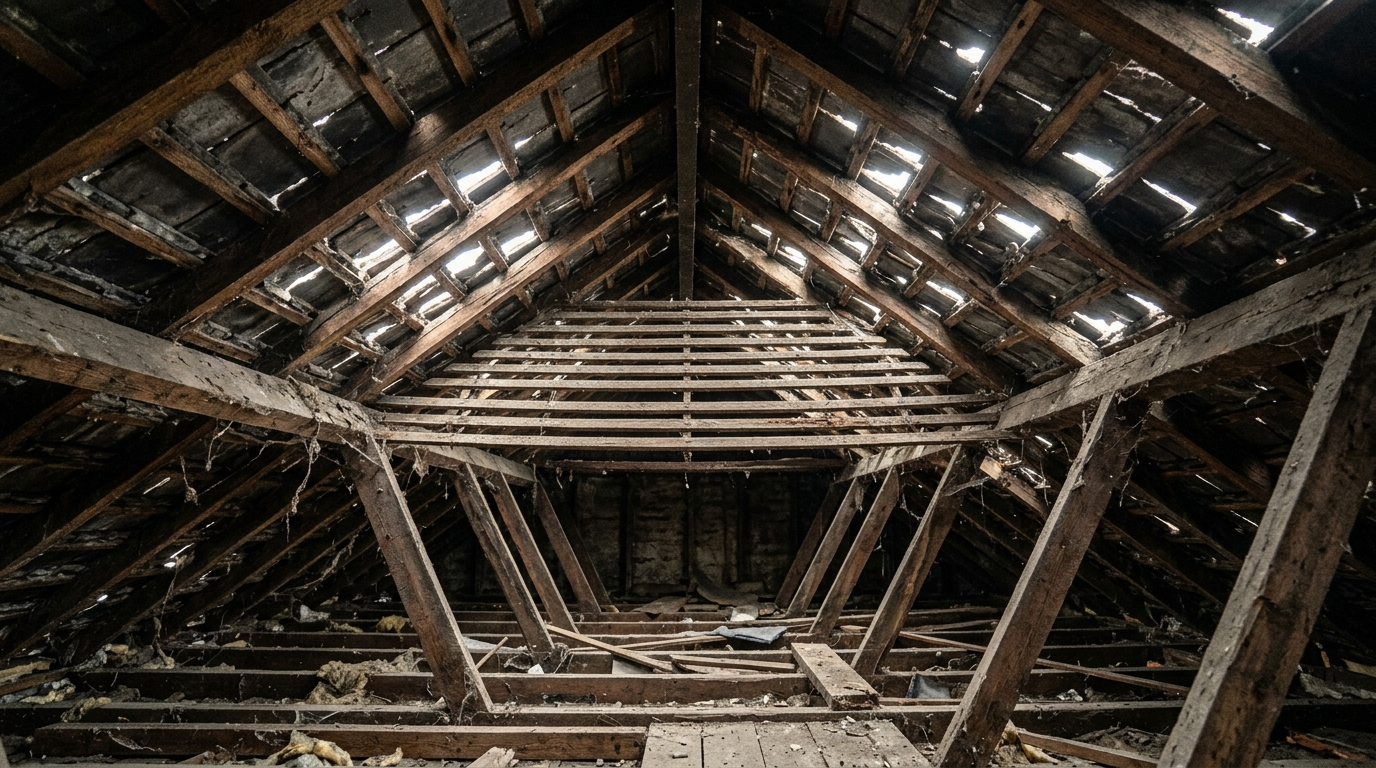
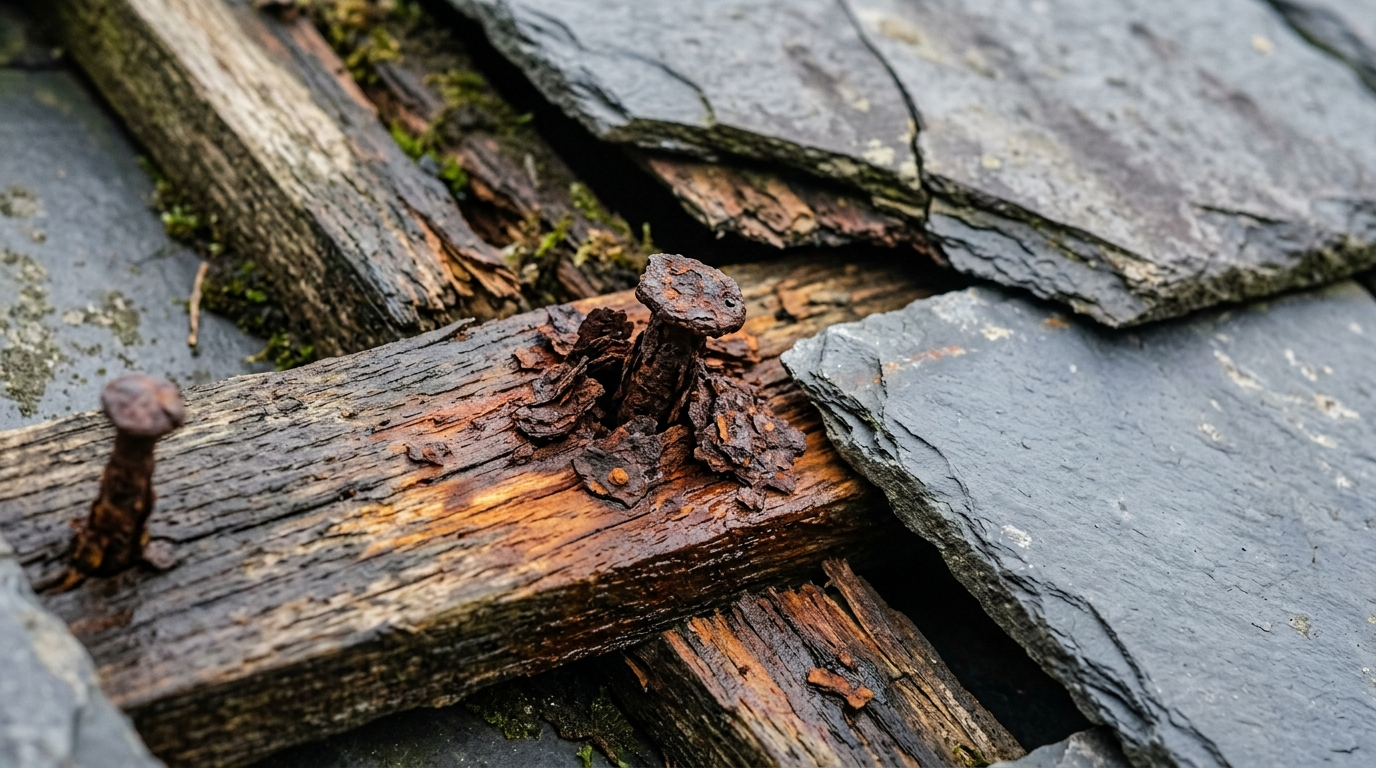
The original slates on most Victorian Burnley terraces were nailed to wooden roof battens using iron nails. Iron and water do not get on well, and the East Lancashire climate has plenty of water. Over decades, those iron nails slowly corrode through. The slates themselves can be in perfectly good condition, but with the nail head rusted away, gravity does the rest. The slate slips down the roof until it catches on the slate below or, on a steeper pitch, slides off the roof entirely.
That is nail sickness. It is not a slate problem. It is not a roofer problem. It is a hundred-year-old nail problem playing out across thousands of Burnley terraces at roughly the same time.
The Tell-Tale Signs on Your Burnley Property
Repeated Slipped Slates
If you have had slates slip from the same roof more than two or three times, that is the clearest sign nail sickness is at work. A one-off slipped slate after a storm is normal wear. Multiple slates slipping in the same area within a few years means the nails holding them have failed.
Visible Gaps in the Roof Line
Stand across the street from your property and look up at the roof. A healthy slate roof has clean, even courses with no obvious gaps. Nail sickness creates small dark gaps where slates have shifted or fallen, particularly near the eaves, ridges, and around chimney stacks. On steep Burnley terrace roofs, the gaps often appear at the bottom of the roof first.
Slates in the Gutter or Garden
Finding broken slate fragments in your gutters or garden after windy weather is a clear indicator. Roof tiles do not just fall on their own unless something has loosened them. On older Burnley terraces, that something is usually corroded nails.
Internal Damp Patches
By the time damp patches appear on bedroom ceilings or in lofts, the nail sickness has likely been at work for a while. Slipped slates create small entry points for water, and over months the moisture tracks down into the property. Damp patches near gable walls or chimney breasts on the top floor are particularly common with nail sickness.
Why Burnley Properties Are Particularly Affected
Burnley's housing stock is overwhelmingly Victorian and Edwardian. Streets across Burnley Wood, Padiham, Brierfield and the older parts of the town centre were largely built between 1850 and 1910, and most of those original roofs are still in place. The materials were built to last, but iron nails were the standard fixing of the era, and we are now well past the point at which they were expected to remain reliable.
The Calder Valley climate accelerates the corrosion. Persistent rain, freeze-thaw cycling, and the soft moisture-laden westerlies that channel up through East Lancashire all contribute to nails reaching the end of their working life earlier than they would on a drier roof further south.
Can Nail Sickness Be Repaired?
In the early stages, yes. A skilled roofer can replace individual slates and re-nail loose ones using modern copper or stainless steel nails that will outlast the slate itself. This works well when nail sickness has only started to affect a small section of the roof.
However, once nail sickness has spread widely across the roof, patching individual slates becomes a losing battle. You will spend more on repeated callouts and partial repairs than a single proper re-roof would cost. At that point, the right answer is a full strip and re-cover.
When to Step Up to a Full Re-Roof
Here are the indicators that suggest your Burnley terrace has reached the re-roof stage:
- Slipped slates appearing across multiple sections of the roof, not just one area
- Three or more separate repair visits within the past two years
- Visible deterioration of the underlay felt when viewed from inside the loft
- Persistent damp patches that return after each fix
- Multiple chimney stack and lead flashing failures alongside the slate issues
- The roof has not been touched since the property was built and is approaching 100 years old
If two or more of those apply, getting a proper assessment from a Burnley roofer is the right next step. The goal is not to push you towards the biggest invoice. The goal is to give you the honest picture of what your roof actually needs.
What a Burnley Re-Roof Involves
A proper re-roof on a standard Burnley terrace strips the existing slates, removes the old felt and battens, replaces any rotten timber, installs new breathable felt and treated battens, re-covers with new slate or matching tile, and finishes with new lead flashing, ridges, and chimney work where needed. Two to four days from start to finish for a standard two-bedroom terrace, longer for larger properties or those with multiple chimney stacks.
Premier Construction Solutions always provides a free written quote after assessing the property. You know the exact price before any work starts. We will tell you straight if a repair will give you another decade of life, or if a full re-roof is the right call.
What to Do If You Spot the Signs
If your Burnley property is showing any of the warning signs above, the right next step is a proper inspection by a local roofer who knows Victorian terraced housing. Patching slates without addressing the underlying nail problem just delays the inevitable, and water damage gets more expensive the longer it goes unfixed.
Premier Construction Solutions covers Burnley, Padiham, Brierfield and surrounding areas across East Lancashire. Every quote is written, free, and no-obligation. Kenny Morphet or a senior member of the team will inspect the roof properly, identify the cause of the problem, and give you a clear price on whether repair or re-roof is the right answer for your property.
Do not put off the inspection. Slipped slates today become serious water damage by next winter. Get in touch today for a free written quote on roofing work anywhere in Burnley and East Lancashire.
