Signs Your Chimney Needs Repairs in Nelson
Your chimney is one of the most exposed parts of the roof, so even small signs of wear can turn into bigger roofing problems if they are ignored for too long. In Nelson, where roofs often deal with repeated rain, wind and colder spells through the year, chimney faults can develop gradually around the pointing, flashing, brickwork and top sections of the stack. The problem is that many chimney issues start small. A little cracking, a bit of movement or a slight leak may not feel urgent at first, but once water begins to get into the roofline the cost and disruption can rise quickly. Knowing the warning signs early gives you a much better chance of getting the issue repaired before it spreads into surrounding roofing materials or starts causing internal damp.
Crumbling pointing and worn mortar joints
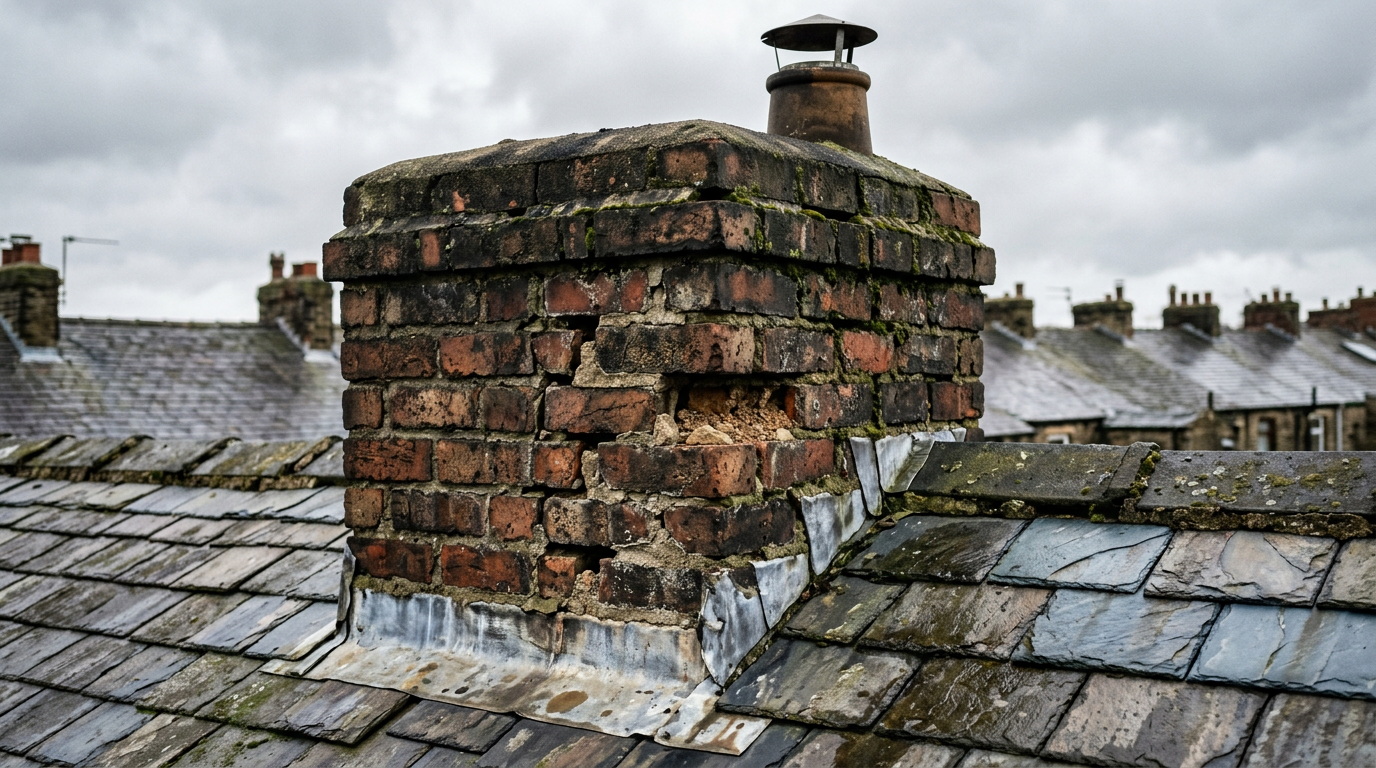
One of the most common signs that a chimney needs attention is damaged pointing. The mortar between the bricks should look firm, complete and tightly packed. If it looks cracked, loose, missing in places or noticeably worn back, moisture can start getting into the stack far more easily. Over time that repeated water entry can weaken the structure and make the chimney more vulnerable during bad weather.
In Nelson, older properties often show this kind of gradual chimney wear. A stack can still look mostly intact from a distance while the mortar is already failing close up. Once the joints begin to open up, rain can sit deeper in the brickwork and the freeze and thaw cycle can make the problem worse. Repointing at the right time is often one of the most effective ways to stop a manageable repair becoming a much larger job.
Lead flashing issues around the chimney base
The lead flashing where the chimney meets the roof is there to keep water out at one of the most vulnerable junctions on the whole roof. If the flashing has split, lifted, slipped or pulled away, rainwater can get in around the base of the stack and track into the roof structure. This is one of the reasons chimney faults often show up as leaks inside bedrooms, loft spaces or around chimney breasts.
Flashing problems are not always obvious from inside the property straight away. Water can travel before it becomes visible, so by the time you notice staining on plaster or damp patches near the chimney breast, the roof junction may already have been letting water in for some time. If leaks keep returning after wet weather, the chimney flashing area is one of the first places worth checking properly.
Cracked bricks and visible movement
Another warning sign is cracking in the chimney brickwork itself. Small hairline cracks can sometimes appear with age, but larger cracks, broken bricks or signs that the stack looks uneven should never be brushed off. Structural movement in a chimney can affect both weatherproofing and safety, and it can also create pressure on nearby roof tiles and ridge details.
The tricky part is that movement does not have to look dramatic to matter. A chimney can still appear upright overall while the brickwork and mortar are already beginning to fail. If one side looks more weathered than the other, if brick faces are starting to break away, or if there are fresh cracks around the stack, that usually points to the need for a closer inspection.
Damp patches, staining and internal signs
Sometimes the first clue is not outside at all. Damp marks on upstairs walls, staining near the chimney breast, peeling paint, bubbling plaster or a persistent musty smell can all suggest water is getting in around the chimney area. In some homes the issue only shows after heavier rain or prolonged wet weather, which can make it easy to miss in drier spells.
The source might be the chimney stack, the leadwork, the top flaunching or the roof junction around the base. What matters is not guessing. If internal signs keep coming back, the fault usually needs more than a temporary patch. A proper roofing inspection helps identify whether the leak is coming through the chimney itself or from surrounding roof materials that have been affected by the same weakness.
Debris, spalling and material falling away
If you are noticing bits of mortar on the roof, in the gutters or on the ground below, that is another strong sign the chimney is deteriorating. Spalling bricks, loose mortar and failed top sections can all point to longer-term weather damage. Once materials begin breaking away, the stack becomes more vulnerable to further water ingress and wind exposure.
This kind of breakdown also affects more than the chimney. Falling debris can damage nearby tiles, block gutters and accelerate wear across the roofline. That is why chimney problems are rarely isolated for long. Once one element starts failing, surrounding sections often begin to suffer too.
Problems around the chimney top
The top of the chimney is easy to overlook, but it matters. If the flaunching around the pots is cracked or worn, water can start getting into the upper part of the stack. Chimney pots that look loose, damaged or poorly bedded in also deserve attention. These faults may not always be visible from ground level, but they can become obvious during a roofing inspection.
Because the top of the chimney takes constant exposure, this area can age faster than many homeowners realise. Catching those issues early helps reduce the chance of bigger repairs later.
Recurring leaks after bad weather
If the same side of the house seems to suffer roof leaks again and again after wind-driven rain, the chimney area is often involved. The fault might be pointing, flashing, cracked masonry or a combination of several smaller issues around the same junction. This is why simple patch repairs do not always solve the problem for long. When one area of the roof keeps showing the same symptoms, it usually means the underlying weakness has not been properly addressed.
Why early chimney repairs matter
The longer chimney faults are left, the more likely they are to lead to internal damp, damaged roofing materials and more expensive repair work. Early repairs are usually far simpler than waiting until the chimney needs rebuilding work or the surrounding roof has also been affected. Acting early also helps protect nearby tiles, underlay, fascias, soffits and interior finishes from avoidable damage.
If you want local roofing help, visit our Roofing Nelson page. For wider roofing coverage across the area, you can also view our Roofing Lancashire page.
If your chimney in Nelson is showing signs of wear, movement or recurring leaks, a proper inspection is the best next step. It gives you a clear view of what needs repairing now and helps stop a small chimney fault becoming a bigger roofing problem.
