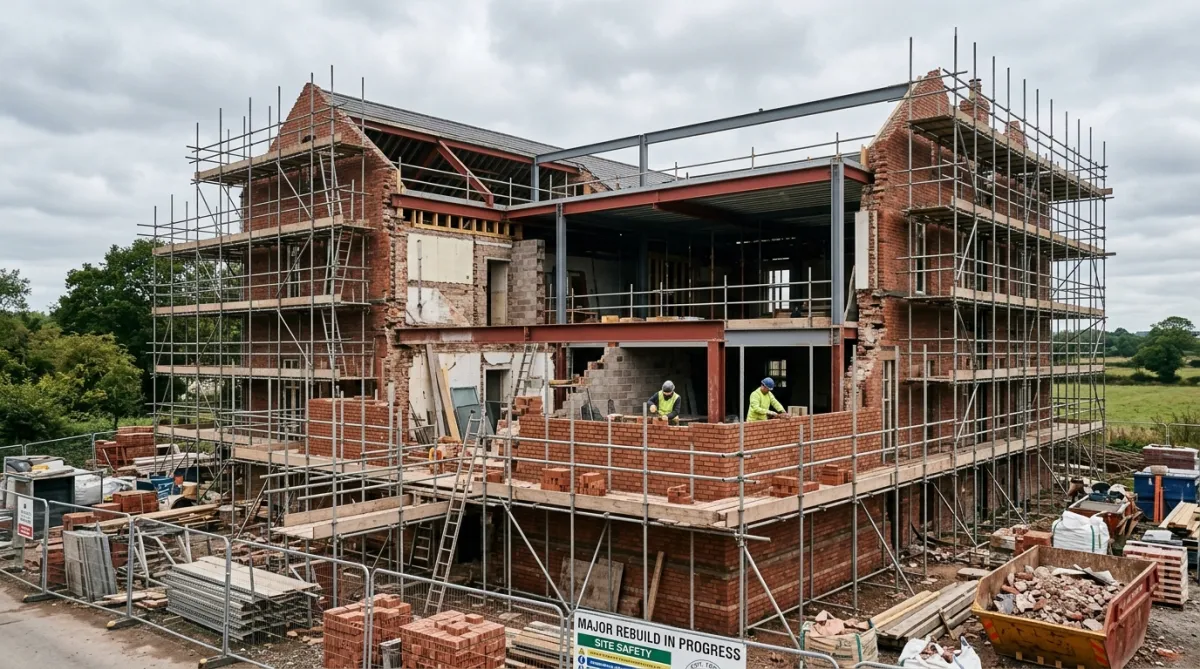
Should You Repair, Renovate or Rebuild? A Lancashire Homeowner's Decision Guide
If you own an older property in Lancashire that is showing its age, you have probably asked yourself the question. Should I spend money on repairs to keep it going, commit to a full renovation, or start over with a substantial rebuild? Each path has different costs, different timescales, different planning implications, and different returns. Getting the decision right at the start can save you years of half-measures and tens of thousands of pounds in misdirected spending.
This guide is for Lancashire homeowners facing that decision on a Victorian terrace, a stone cottage, a post-war semi, or any older property where the easy path of "patch and continue" is starting to feel unsustainable. At Premier Construction Solutions we have walked clients through this decision many times across the East Lancashire patch and the framework below comes from real conversations on real properties.
Start With Your Long-Term Plan
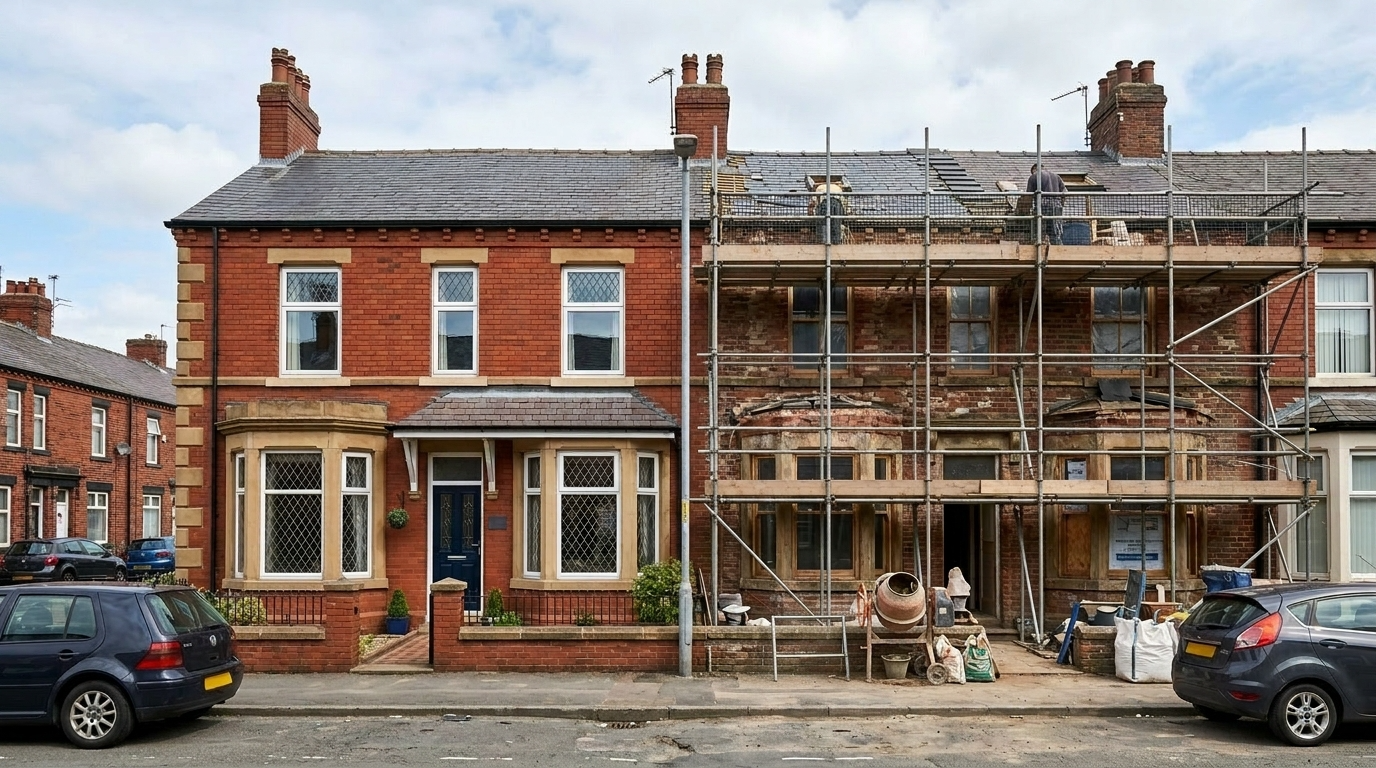
Before any cost analysis, think about how long you plan to stay in the property. Your answer determines everything.
Selling Within 2 to 3 Years
Repair only. Spend money on safety issues, leaks, and visible defects that would put buyers off. Do not invest in renovation that will not return its cost in a sale. Lancashire buyers are pragmatic, they would rather pay less for a property they can improve themselves than pay a premium for someone else's choice of kitchen.
Staying 5 to 10 Years
Renovation makes sense. You will benefit from the improvements yourself and recover most of the cost at sale because the property will be worth more in better condition. Focus on the items that improve daily living and longevity, not pure cosmetic upgrades.
Staying 10+ Years or Forever Home
Full renovation or rebuild. You have the time horizon to justify major investment. The deciding factor is the structural condition and whether the existing property can sensibly be brought up to the standard you want, or whether you would be better off starting again.
The Repair Path
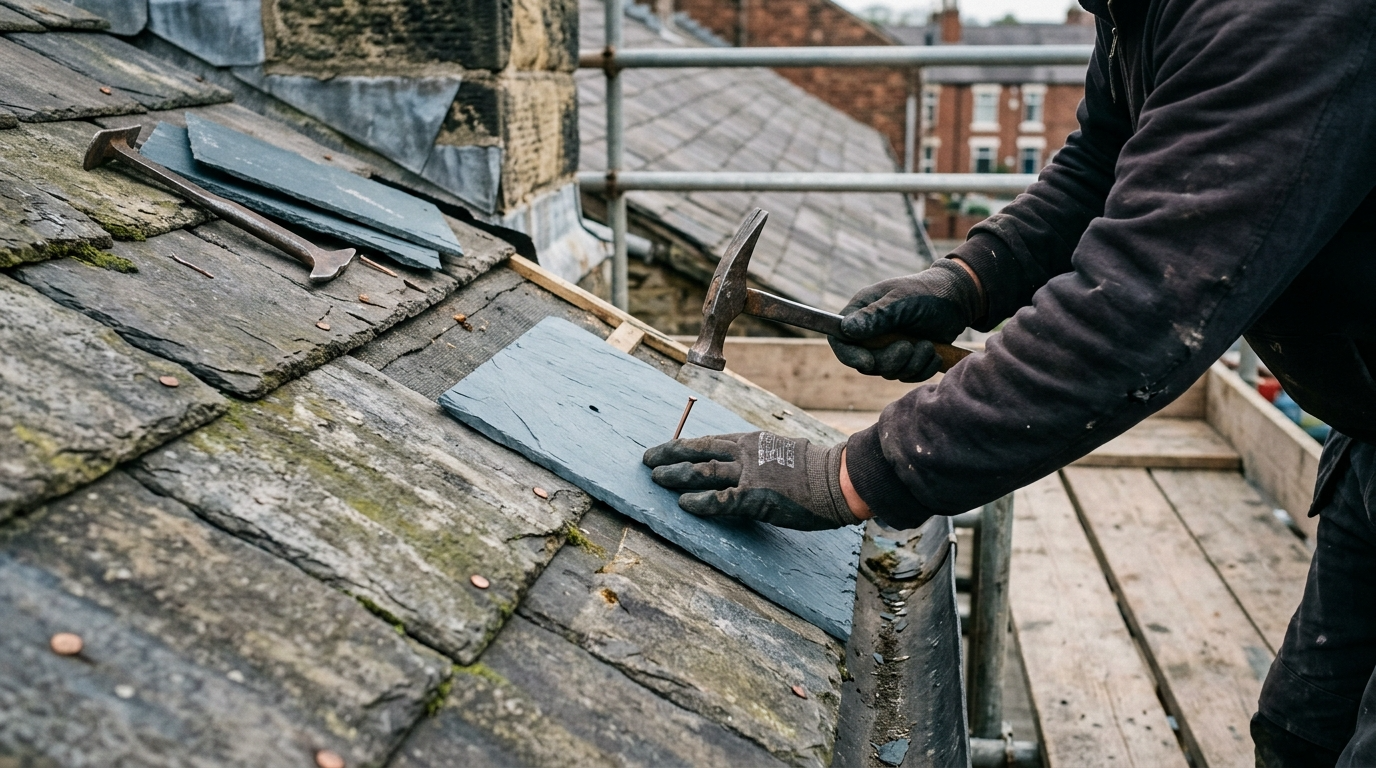
Repair work fixes specific issues without changing the overall character or layout of the property. Typical repair scope on a Lancashire property includes:
- Roof repairs (slipped slates, chimney work, flashing replacement)
- External pointing and brickwork repair
- Window repair or like-for-like replacement
- Damp remediation where genuinely needed
- Boiler replacement and heating repair
- Bathroom and kitchen refresh (replace, do not reconfigure)
- Decoration and finishes
Typical Cost
Modest, often in the low to mid five figures depending on scope. Most Lancashire homeowners can spread repair work over several years and pay as they go.
When Repair Is the Right Call
- The property is fundamentally sound
- Issues are isolated and specific rather than widespread
- You are planning to sell within 5 years
- Budget is limited or you prefer staged investment
- The property's character is what you bought it for and you do not want to change the layout
The Renovation Path
Renovation takes the existing property and brings it up to modern standards across all aspects, while preserving the structural fabric and most of the character. Typical Lancashire renovation scope includes:
- Full rewire and replumbing
- New central heating system
- Insulation improvements (loft, walls, floors)
- Replastering throughout
- New kitchen and bathroom (often reconfigured)
- Internal layout changes (knock-throughs, opening up spaces)
- Full external repair (roof, pointing, render, windows)
- New flooring
- Full redecoration
Typical Cost
Substantial. A proper full renovation of a Victorian Lancashire terrace runs into the high five figures to low six figures depending on size and specification. Add a contingency of at least 10% because older properties always surprise you.
When Renovation Is the Right Call
- The structural fabric is sound, even if everything else needs work
- You love the property's character and location
- You are staying 7 to 10 years or longer
- The repair list has grown long enough that doing it piecemeal no longer makes sense
- You want a modern interior in a period shell
- Planning constraints make a rebuild difficult or impossible
The Rebuild Path
Rebuild means demolishing some or all of the existing property and constructing new in its place. This is a much bigger commitment financially, but in some cases it is genuinely the right answer for a Lancashire property. Typical rebuild scope includes:
- Demolition of all or part of the existing structure
- New foundations, often replacing inadequate Victorian footings
- New structural frame
- Modern building envelope to current insulation and airtightness standards
- All new services, internal finishes, kitchen, bathrooms, fittings
- Often a complete redesign of the layout to suit modern living
Typical Cost
Considerably more than renovation. A full rebuild typically costs 1.5 to 2 times what a full renovation would on the same site. The trade-off is a property built to modern standards from the foundations up, with running costs much lower than any renovated Victorian property can match.
When Rebuild Is the Right Call
- The structural fabric is genuinely beyond economic repair (severe settlement, widespread structural failure)
- The existing layout cannot meet your needs and renovation would create awkward compromises
- You want a property built to current energy efficiency standards that no renovation can match
- The plot is the real asset and the existing building is incidental
- You are staying long-term and want to amortise the higher upfront cost across many years of lower running costs
- Planning policy allows a larger or better-designed replacement (some Lancashire authorities are open to this in the right circumstances)
The Hidden Path: Renovate Plus Extend
For many Lancashire homeowners on Victorian terraces or semis, the right answer is actually renovation of the existing property combined with a sensitive extension. This gets you most of the benefits of a rebuild (modern living space, better layout, current standards) while preserving the character of the original property and avoiding the planning complications of demolition and new build.
A rear extension on a terraced or semi-detached property in places like Burnley, Blackburn, or Accrington typically falls within permitted development rules and can transform daily life in the property. Combined with a full internal renovation, the result is often better than a rebuild and at a similar overall cost.
The Decision Framework
Here is the order to think it through:
- How long will I be in this property?
- What is the structural condition (formal Level 3 survey, not guesswork)?
- What does the property need to become what I want it to be?
- What is the total cost of getting there via each path?
- Which path matches my budget, timescale, and tolerance for disruption?
Answering all five questions properly takes time. Skipping any of them leads to misdirected spending and projects that disappoint.
What Premier Construction Solutions Can Help With
We have helped Lancashire homeowners through all four paths. We can:
- Walk the property with you and give an honest assessment of which path makes most sense
- Provide costed quotes for each viable option so you can compare them properly
- Coordinate with structural engineers and surveyors where deeper investigation is needed
- Handle the planning route for renovation, extension, or rebuild
- Deliver the work to the standard the property deserves
What to Do Next
If you are weighing up repair, renovate, or rebuild on a Lancashire property, the right first step is an honest conversation with a contractor who has no incentive to push you toward the biggest invoice. Premier Construction Solutions works across Burnley, Blackburn, Skipton, Colne, Nelson, Accrington, Darwen, Rossendale, Bacup, Clitheroe, Rawtenstall, Haslingden, Great Harwood, Padiham and Chorley.
Every quote is free, written, and no-obligation. Kenny Morphet or a senior member of the team will assess your property properly and lay out the realistic options. Get in touch today for an honest discussion of your Lancashire property and what path makes most sense.
