Lead Flashing vs Sealant: Why Proper Lead Work Matters on Your Lancashire Roof
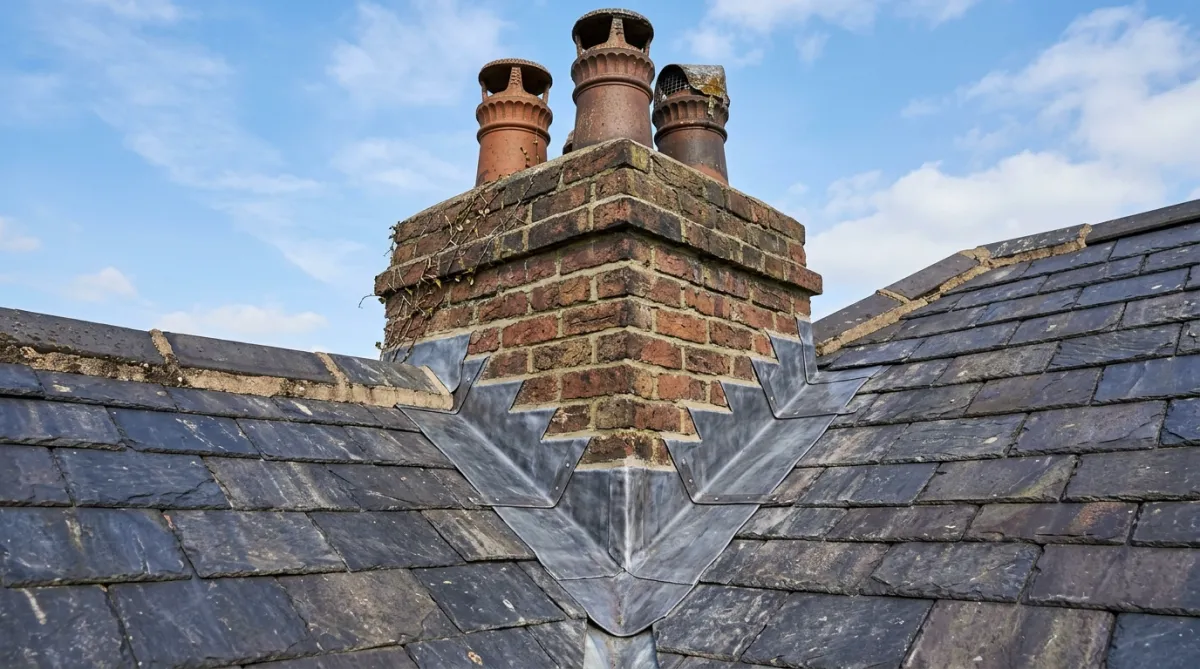
Walk down any street in Burnley, Blackburn, or Accrington and look at the chimney stacks. On older properties, you will see one of two things sealing the junction between the chimney and the roof. Lead flashing that has weathered to a soft grey patina, often a hundred years old and still doing its job. Or black bitumen sealant slapped on by someone in a hurry, already cracking after a few winters.
That difference matters more than most Lancashire homeowners realise. Lead flashing is what proper roofing standards require at every roof-to-wall junction. Sealant is the cheap shortcut that fails fast and causes expensive damage. This guide explains why lead flashing is non-negotiable on a Lancashire property and how to spot the difference before it costs you.
What Is Lead Flashing?
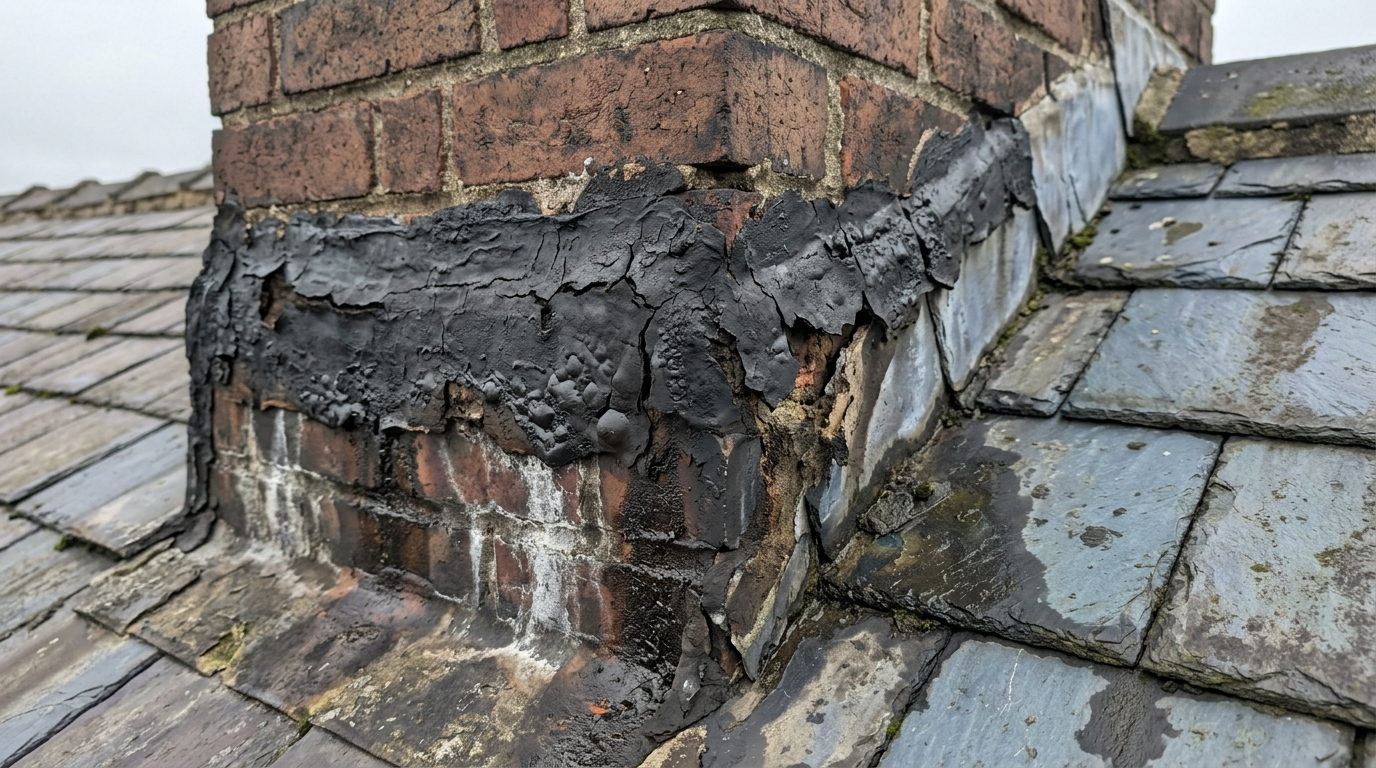
Lead flashing is a thin sheet of lead that forms the waterproof seal at any point where a roof meets something vertical. The most common locations are around chimney stacks, where a lower roof joins a wall, at dormer windows, and in valleys between two pitched roofs. Done properly, lead flashing is bent and dressed into the mortar joints of the brickwork, then tucked under the slates or tiles to form a watertight barrier.
Lead is used because it is durable, malleable, naturally weather-resistant, and lasts for decades without significant deterioration. Properly installed lead flashing on a Lancashire property will typically outlast the slates above it.
Why Sealant Fails
Black bitumen sealant looks like a solution. It is cheap, fast to apply, and seems to solve the problem of water getting in around a chimney or roof junction. Some Lancashire roofers and general handymen use it as a substitute for proper lead work, particularly when they want to win a low-priced job or do not have the skills to dress lead correctly.
The trouble is that sealant fails. It does not last like lead does. Here is what happens to bituminous sealant on Lancashire roofs:
- Year one, looks fine, water stays out
- Year two to three, surface starts to oxidise and the seal develops hairline cracks from thermal expansion and contraction
- Year three to five, cracks open, water starts penetrating, the bond to the brickwork starts to fail
- Year five onwards, sections come loose, water tracks into the property, damp patches appear on internal walls or ceilings
By the time the homeowner notices internal damage, the failure has been progressing for two or three years. The cost to put right is far greater than the cost of doing lead work in the first place.
The Worst Place to Use Sealant: Chimney Stacks
Chimney stacks are the single most common place we see failed sealant work on Lancashire properties. Older Burnley, Padiham, and Blackburn terraces often have multiple stacks, all fully exposed to the prevailing Pennine weather. Every junction between the stack brickwork and the roof slates needs proper lead flashing.
When previous roofers have used sealant instead, the result is usually damp internal chimney breasts, plaster damage on top-floor bedrooms, and in bad cases water tracking down through ceiling joists into rooms below. None of this is fixable without removing the failed sealant entirely and replacing it with correctly dressed lead flashing.
How to Spot Failed or Improper Lead Work on Your Lancashire Property
You do not need to climb on the roof to assess this. From the ground or an upstairs window, look for:
1. Black Sealant Around Chimney Bases
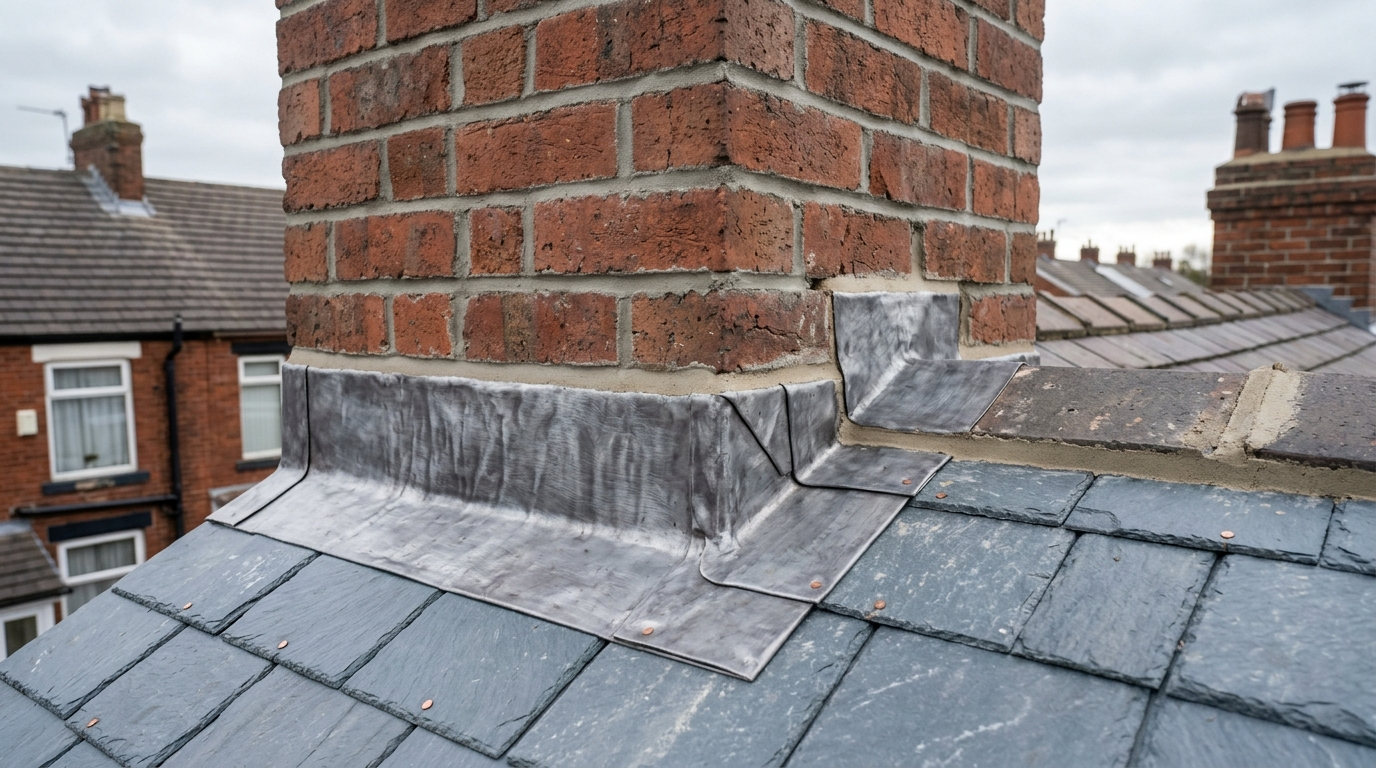
If you see thick black bitumen around the base of your chimney stack rather than grey lead, that is sealant. Even if it looks intact, it is on borrowed time.
2. Visible Cracking or Lifting
Sealant that has cracked, lifted, or come away from the brickwork is actively letting water in. This often shows as a thin black line peeling away from the mortar joint.
3. Lead That Has Been Patched With Sealant
Sometimes original lead flashing has been "repaired" with sealant. This is not a repair. It is a sign that the lead beneath has split or come loose and needs proper attention.
4. Internal Damp Patches Near Chimney Breasts
Damp staining on top-floor bedroom walls near a chimney breast is a strong indicator of failed flashing above. By the time it shows internally, the external problem has been progressing for a while.
The Cost Difference, and Why It Matters
Proper lead flashing costs more upfront. A skilled roofer dressing new lead around a chimney stack on a Lancashire terrace is a half to full day's work, depending on stack size and complexity. Sealant takes thirty minutes and looks identical on day one to someone who does not know what to look for.
The difference shows up in years three, five, and ten. Lead is still there doing its job. Sealant has failed, been patched, failed again, caused internal damage, and now needs replacing entirely. The true cost of choosing sealant over lead is paid in interior plaster work, redecoration, and the eventual proper lead job that should have been done first time round.
What Premier Construction Solutions Does
Lead is what we use, every time. Around chimney stacks, in valleys, at parapet walls, on dormer windows. Properly dressed, tucked correctly into the mortar joints, and finished cleanly. If your Lancashire property has lead work that needs replacing or if you are putting up new flashing as part of a re-roof, we do not take shortcuts.
If you have been quoted by another contractor for "flashing repair" without specifying lead, ask the question directly. A reputable Lancashire roofer will use lead. A cheaper one will use sealant and hope you do not know the difference.
What to Do Next
If your Lancashire property has black sealant around chimney stacks, visible damp near chimney breasts, or you suspect previous flashing work has failed, get it inspected properly. Premier Construction Solutions serves Burnley, Blackburn, Skipton, Colne, Nelson, Accrington, Darwen, Rossendale, Bacup, Clitheroe and surrounding areas. Every quote is written, free, and no-obligation, and we will tell you straight whether the work needs doing now or can wait.
Get in touch today for a free written quote on lead flashing, chimney work, or any roofing job across Lancashire.
